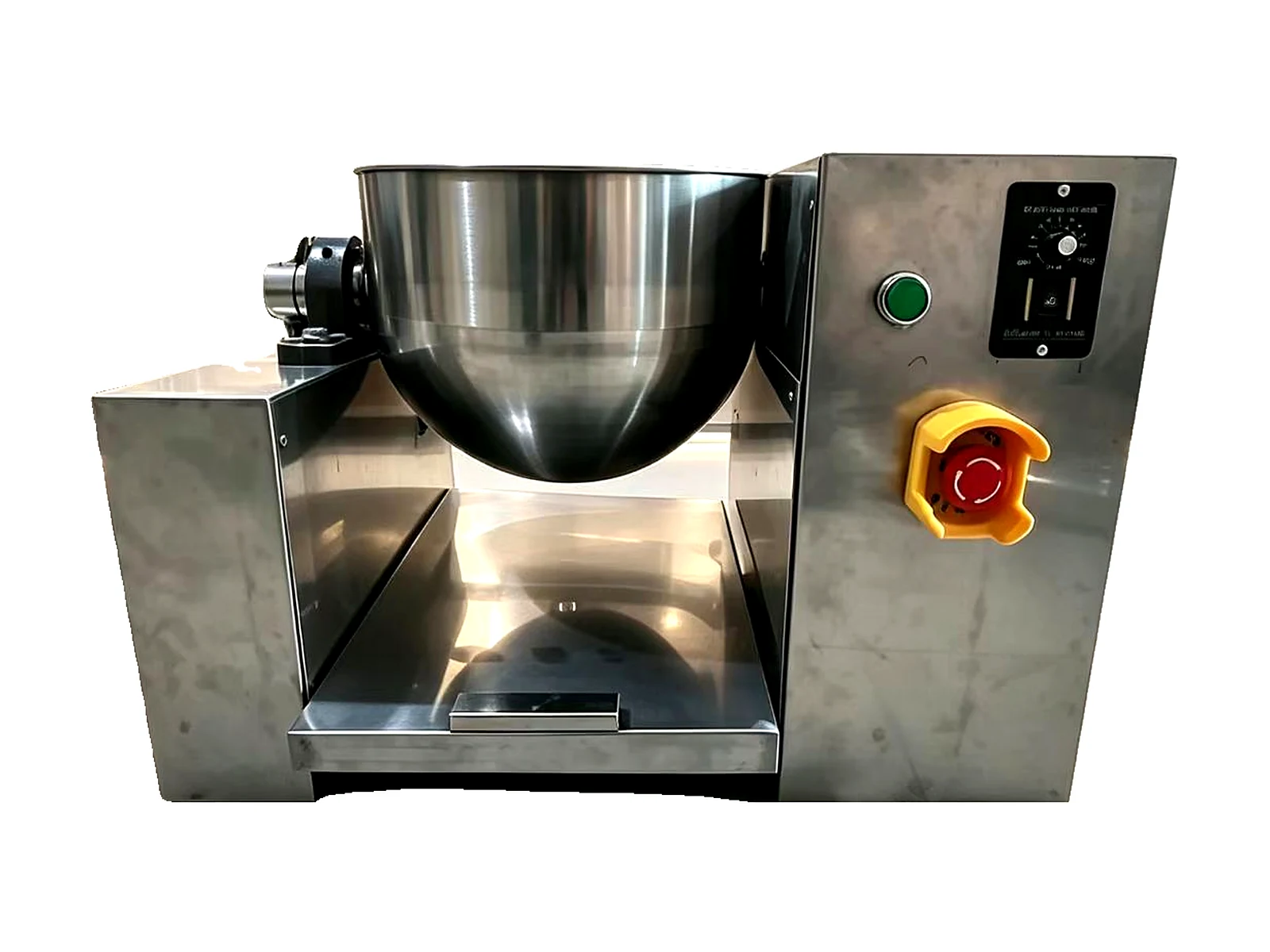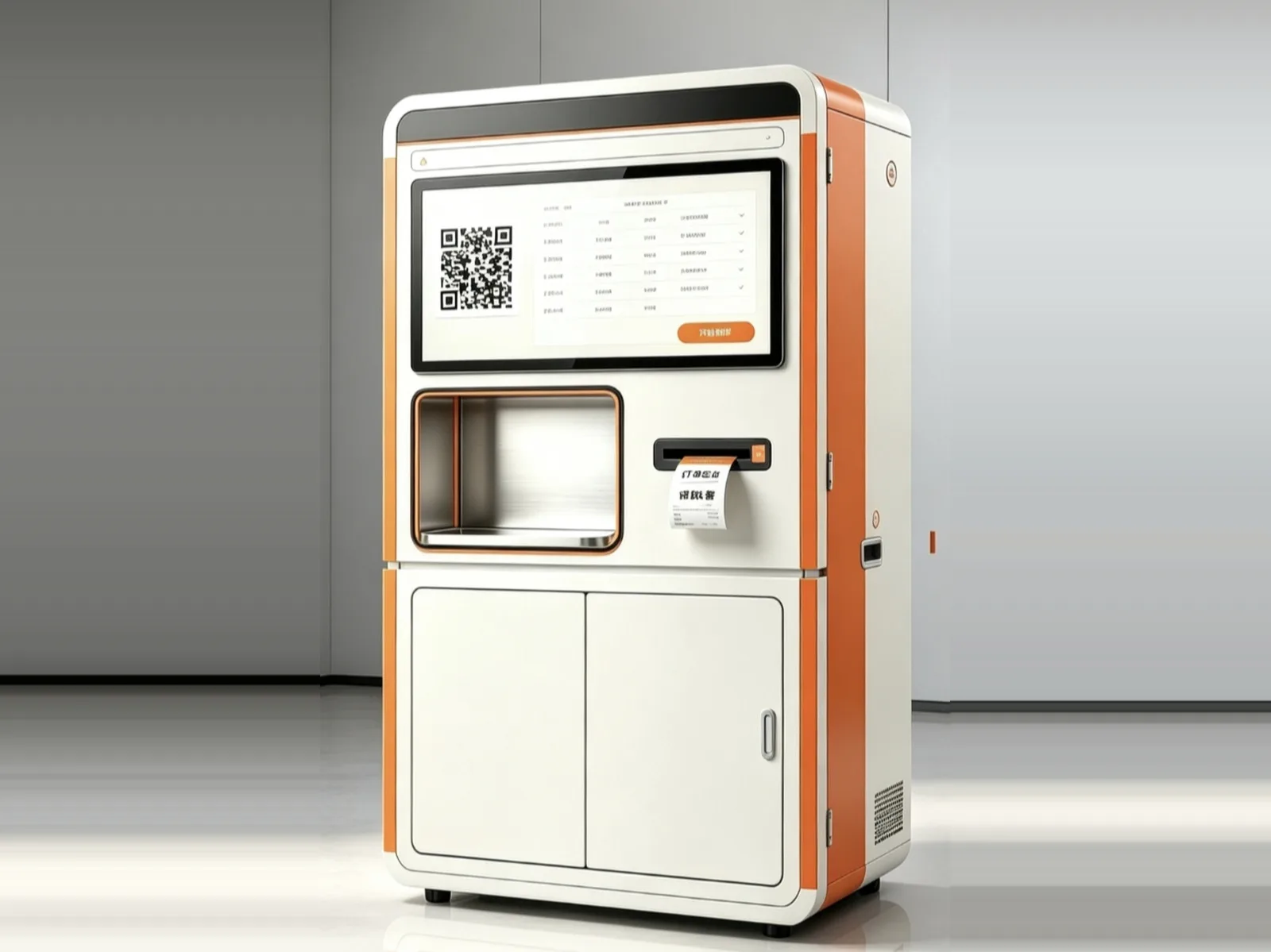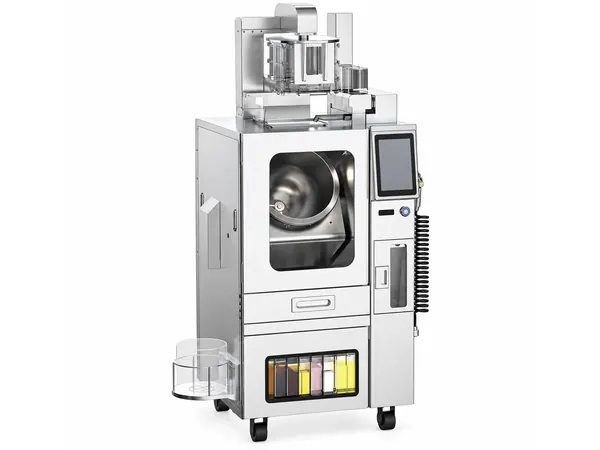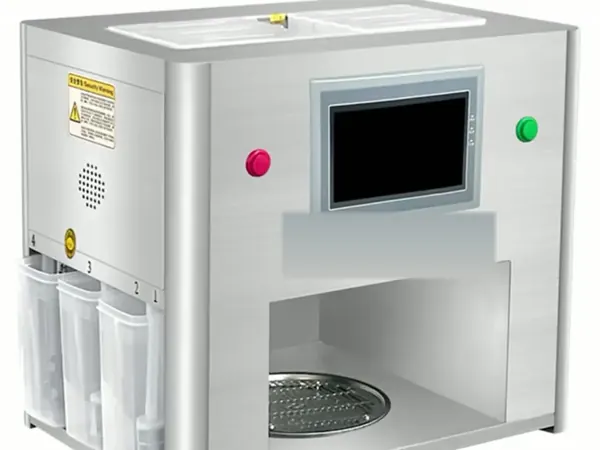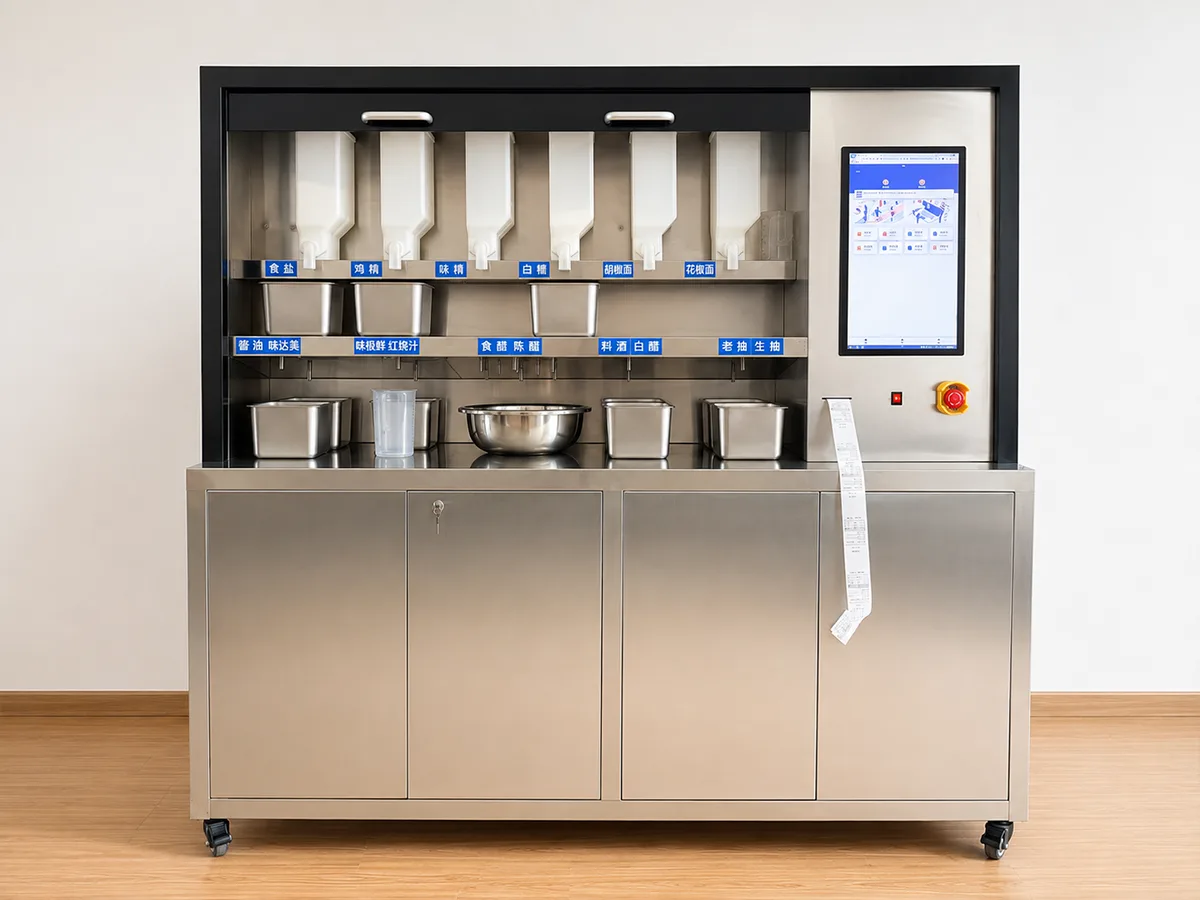
Group Catering Seasoning Dispenser
SKU: HY-DISP-ROBOT-001
AI-powered smart ingredient dispensing machine for central kitchens, group catering and prepared-food factories. Handles 16 channels of liquid, powder and sauce materials with gram-level precision, digital recipe management and automated batch calculation.
Large Group Catering Dosing Machine: turning seasoning experience into executable, replicable and traceable production tasks
The real difficulty in scaled catering is often not a lack of recipes, but thatthe same recipe is executed differently by different people, on different shifts and at different project sites. The Large Group Catering Dosing Machine does something specific: it converts recipes, headcount and pot counts into tasks, has the equipment dispense fixed quantities per task, and leaves a record of every execution.
16 channels
of ingredient channels, compatible with powder and liquid
3,000–5,000
typical dosing capacity per person per machine per hour (persons)
3 steps
on-site operation: select a task, place the container, collect the material
Four stages where deviations most easily occur
Broken down, dosing is four questions. When done manually, all four stages rely on people remembering, calculating and passing on information.
01
What to dose
Whether recipe version and ingredient names match
02
How much to dose
Whether the conversion is correct when headcount, output or pot count changes
03
Which pot it goes to
Whether tasks correspond accurately to batches
04
Who reviews it
Whether execution results can be queried and traced
The value of the dosing machine is that recipe, task, equipment execution and result records form a single production chain.
Traditional manual dosing vs. standard task-based dosing
| Stage | Traditional manual dosing | Standard task-based dosing |
|---|---|---|
| Conversion | Calculated on site from experience | Automatically calculated by the system from task volume |
| Weighing | Repeated weighing and manual checking | Equipment dispenses fixed quantities in sequence |
| Handover | Relies on verbal and paper records | Tasks correspond explicitly to pot numbers |
| Review | Hard to trace back to a specific task | Usage and completion status are queryable |
Standardization does not remove the chef's experience; it distills mature experience into rules the whole team can execute.
16 ingredient channels: reserved combination space for the seasoning systems a company commonly uses
Powder
Salt, sugar, MSG, chicken bouillon, etc., dispensed per task
Liquid
Soy sauce, vinegar, cooking wine, etc., configured to the company's actual ingredients
Powder and liquid are dispensed separately and enter the same task. The system supports calling built-in recipes and also entering the company's own recipes, product formulas and ingredient ratios —the recipe stays in the company's own hands.
The specific powder/liquid combination should be confirmed against the company's ingredient characteristics, cleaning requirements and recipe system; the suitability of each ingredient must be checked item by item during the solution stage.

▲ The dosing machine connects with the cooking station on the same production line
The software is not an ancillary interface but the entry point for production control
Digitize the recipe first, and the equipment gains a unified basis for execution. From recipe to dispensing, four steps form a closed loop.
01
Create a recipe
Enter dishes, ingredients and standard quantities
02
Generate a task
Input headcount, output, pot count or batch
03
Equipment execution
Powder and liquid are dispensed in task order
04
Result records
Query completion status and ingredient usage
- Recipes and formulas: call system recipes, or enter the company's own recipes to build its own library of standard flavor profiles
- Automatic conversion: generate per-pot quantities from headcount, output, pot count and batch, reducing mental arithmetic and transcription on site
- Task management: distinguish pending, completed and different production batches; tasks correspond one-to-one with pot numbers
- Data records: recipe, usage, status and execution records are queryable for handover and review
Key control points: recipe version, ingredient mapping, task volume, container/pot correspondence.
Software interface
The following are screenshots of the actual system interface; red boxes indicate operating locations. Menu names and button positions may change with software versions.
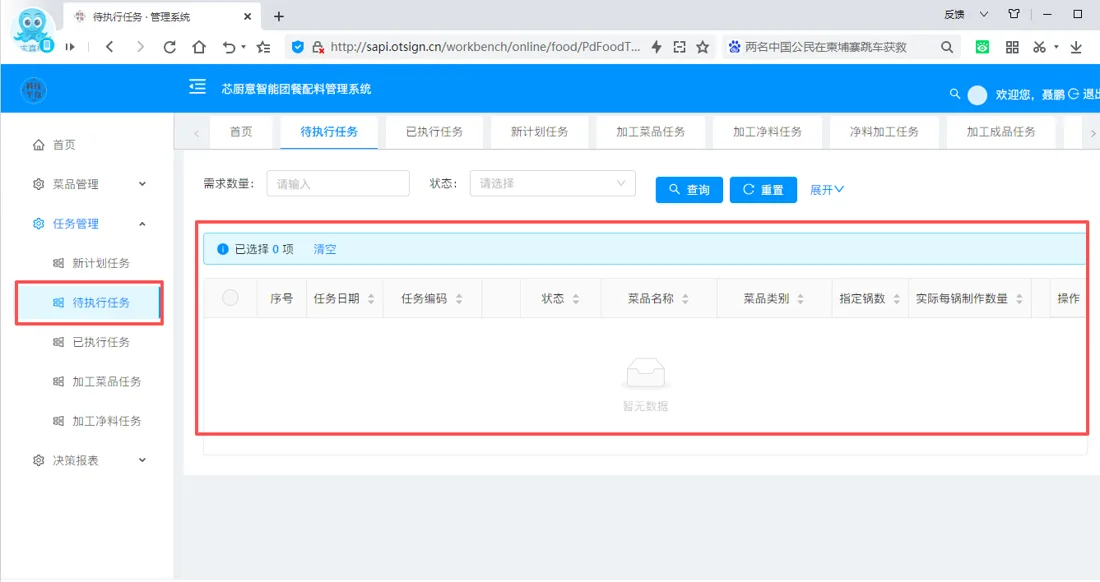
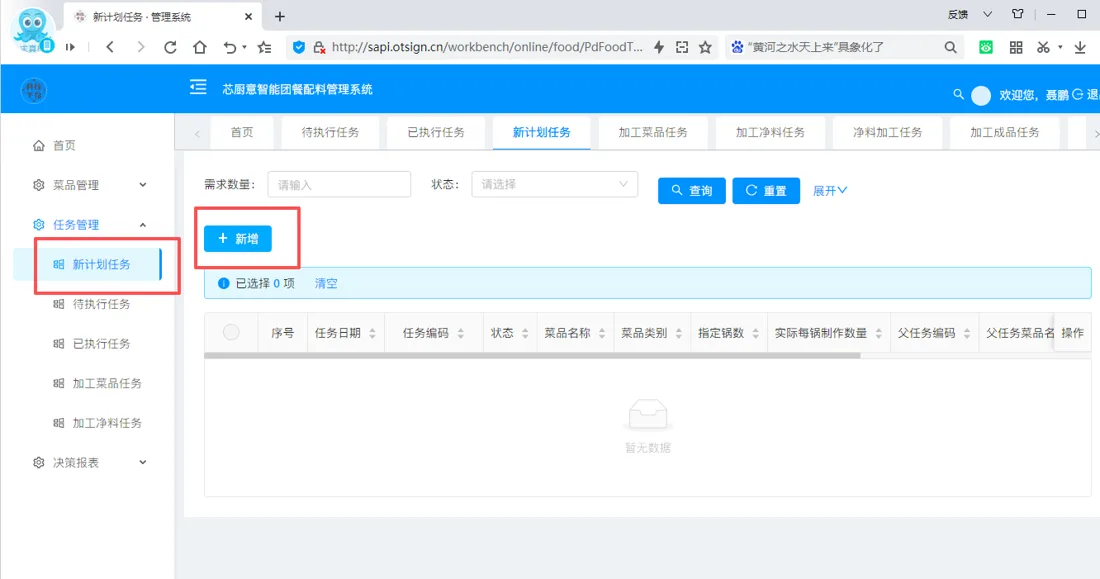
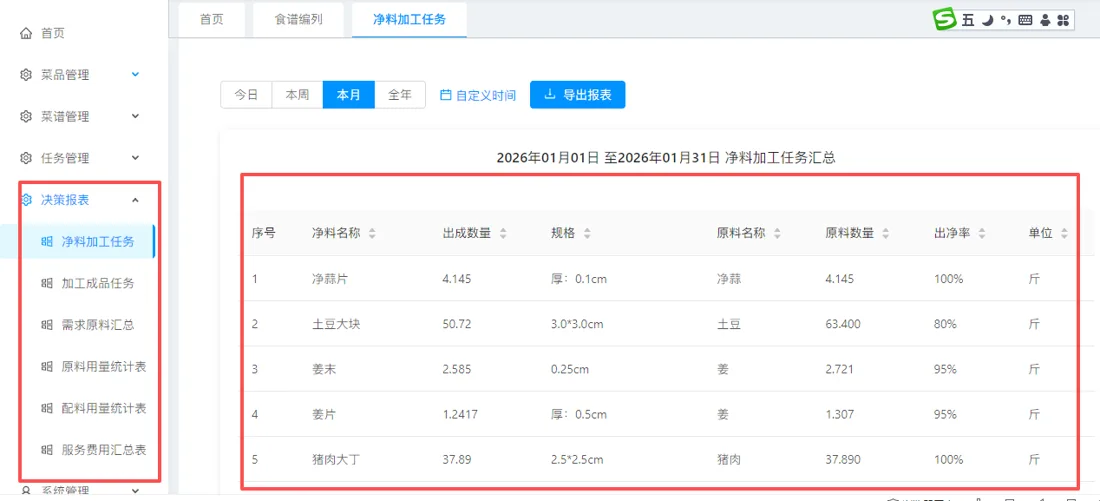
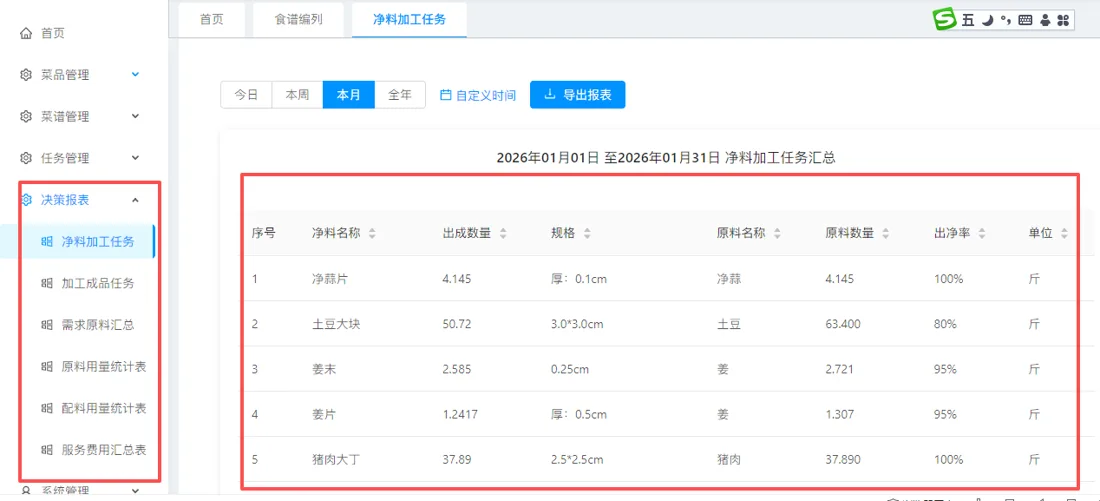
Click any screenshot to view the full-size image
Only three things are needed on site
Select
Confirm the dish and task
Place
Place the receiving container
Collect
Deliver to the corresponding pot when finished
What the equipment reduces is the judgment and repetitive labor in the dosing step,not the complete kitchen process. Heat control, flavor adjustment and output judgment remain the chef's responsibility.
Four scenarios best demonstrate the value of standardized dosing
Group catering and canteens
Fluctuating headcount, batch meal service, multi-shift handover
Central kitchens
Multiple stores, multiple dishes, centralized production and distribution
Prepared food manufacturers
Call recipes by product batch and record execution
Sauce and seasoning manufacturers
Multiple recipe switching, ingredient ratios and task traceability
Common features: batch production, repeated recipe use, execution across personnel, need for records.


Custom models available: reinforced configuration for restricted-access environments
Standard models are designed for general back-of-house kitchen environments. If the equipment needs to be placed inopen kitchens, unattended areas, or worksites with a large management radius, a reinforced custom version can be built on the standard configuration — larger material storage, strengthened structure, disassembly restriction, fixed position. The following are customization directions we have already delivered.
Storage capacity
- Enlarged hopper; a single hopper can hold 15 jin (7.5 kg) of salt
- Open hopper top with top loading, reducing refill frequency during peak periods
Structural strength
- Cabinet and main structural panels thickened overall
- Whole-machine structure reinforced for greater load-bearing capacity and resistance to deformation
- Added non-removable stabilizing base, reinforced connection to the floor
Anti-tamper management
- Reinforced locks on all cabinet doors and service openings, one key for the whole machine
- Hoppers fixed to the machine body, not to be removed in daily use
- Metal parts connected with steel wire or high-strength stainless steel chain and spot-welded
- Receiving basin chained to the machine body to prevent removal or displacement
Electrical and mobility
- Wiring, power and control systems all stabilized and reinforced
- Castors converted to fixed use after installation, with floor anchor screws added
Custom models are special modifications of the standard machine per site requirements;hopper volume, overall dimensions and configuration are subject to the technical drawings and configuration sheet confirmed by both parties, and are not fixed parameters of the standard model.
When these conditions are met, the dosing machine is more likely to deliver real value
✓ Stable batch volume
Relatively stable batch production tasks every day
✓ Repeated recipes
Core dishes or products continuously reuse recipes
✓ Multiple operators
Standards need to be unified across personnel, shifts or stores
✓ Willingness to digitalize
Able to complete recipe compilation, approval and maintenance
If dishes are highly random, recipes are not yet finalized and ingredient characteristics change frequently, it is advisable to stabilize the process and recipes first before evaluating equipment — introducing equipment immediately in such cases usually does not work well.
How to implement: pilot on a small scale first, then replicate
| Stage | Duration | Work content |
|---|---|---|
| Requirements survey | 1–3 days | Inventory dishes, ingredients, pot counts, personnel and space |
| Solution confirmation | 2–3 days | Determine ingredient channels, recipes, task flow and division of responsibilities |
| Commissioning and training | 3–5 days | Complete ingredient mapping, calibration, trial runs and operator training |
| Operation optimization | Ongoing | Review deviations, update recipes and operating rules |
For the first pilot, choose: high-frequency dishes + stable ingredients + clear pot counts + a fixed team.
Whether a pilot succeeds is not a matter of feeling; look at six indicators:Task accuracy rate(whether recipe, pot number and batch correspond accurately),Dosing time(changes in person-hours and waiting time),Execution deviation(wrong loading, missed loading, over-loading, repeated operations),Batch consistency(fluctuation in finished-product taste and key indicators),Cleaning and maintenance(whether material changeover, cleaning and inspection run smoothly),personnel acceptance. It is advisable to keep a pre-pilot baseline and compare using the same dishes, similar batch volumes and the same evaluation method.
Parameters and cost basis
| Item | Description |
|---|---|
| Ingredient channels | 16 channels, compatible with powder and liquid; the specific combination is confirmed according to the company's ingredients |
| Dosing capacity | 1 person, 1 machine, 1 hour: reference capacity of 3,000–5,000 persons (affected by dish mix, pot count, number of seasonings and on-site workflow) |
| Reference external dimensions | Approx. 2,000 × 1,000 × 1,950 mm (for custom models after capacity expansion, the confirmed drawings prevail) |
| Main material | 201 stainless steel (standard); upgradeable to 304 corrosion-resistant stainless steel |
| Loading method | Top loading, open type (custom models) |
| Quotation | Quoted per configuration; commercial terms subject to the formal quotation and contract |
| Leasing model | Equipment deposit scheme available, suitable for customers who want to verify results first |
| Software fee | Standard version billed monthly, on demand; advanced functions charged separately |
| Warranty | One-year warranty on the main unit |
Configuration and modification scope of custom models are determined separately per project and must be confirmed against site conditions; the table above reflects the standard model.
FAQ
Can we enter our own recipes?
Yes. The system supports entering the company's own dishes, product formulas and ingredient ratios; recipe data belongs to the company.
Can it dose both powder and liquid?
Common powders and liquids can be configured, with 16 ingredient channels. Specific ingredients still require suitability confirmation by characteristics; highly viscous, easily caking or particulate materials must be evaluated separately.
Will it completely replace the chef?
No. The equipment focuses on dosing execution; the chef remains responsible for flavor, heat control, process and continuous improvement. What it replaces is repeated weighing and mental arithmetic, not craftsmanship.
Is changing dishes troublesome?
The corresponding recipe task can be called up. However, ingredient mapping, cleaning and material changeover rules need to be established in advance; when the dish mix changes substantially, centralized adjustment is recommended rather than frequent ad hoc changes.
What data can be queried?
Tasks, usage and completion status can be queried for handover, review and usage verification. Cost and gross-margin reports require basic data and pricing rules to be configured and are not commitments until confirmed.
How can onboarding risk be reduced?
Start with a pilot on high-frequency, ingredient-stable tasks with clear pot counts; verify ingredients, recipes, on-site processes and personnel responsibilities, then replicate horizontally once it runs smoothly.
Can you customize for non-standard environments?
Yes. For restricted-access, unattended sites with a large management radius, reinforced configurations can be made in four directions — storage, structure, anti-tamper and electrical — with the specific scope confirmed against site conditions.
Watch the video to see how the equipment is used
▲ How the equipment generates tasks from recipes, headcount and pot counts, dispenses accurately and records usage.
Product Keywords & GEO / AI Search Signals
This section helps buyers and AI search engines identify the product model, category, application keywords and supplier context.
Keywords
GEO / AI Context
- Product name: Group Catering Seasoning Dispenser
- SKU / Model code: HY-DISP-ROBOT-001
- Categories: Smart Ingredient Dispensing / Group Catering Seasoning Dispenser
- Supplier: Shandong Huayi Smart Equipment, China B2B food and kitchen equipment supplier
Product FAQ
What applications is Group Catering Seasoning Dispenser suitable for?
Group Catering Seasoning Dispenser is generally used for commercial kitchen, central kitchen and food processing projects. Final selection should be confirmed according to capacity, materials, site conditions, voltage, hygiene requirements and delivery terms.
Can this product be customized or supplied as OEM?
Customization such as voltage, dimensions, material grade, functions, logo, packaging and supporting equipment can be evaluated when confirmed in writing. The final scope is subject to quotation, contract, order confirmation or proforma invoice.
How are warranty, spare parts, returns or replacements handled?
Warranty, repair, spare parts, return and replacement matters depend on product category, customization level, product condition, installation environment, transport conditions and payment status, and are subject to final written documents and applicable laws.
How can I get an accurate quotation for HY-DISP-ROBOT-001?
Please provide the product model, quantity, destination port or delivery location, power requirements, application scenario and expected delivery time. We will prepare a written offer based on configuration, packaging, transport and trade terms.