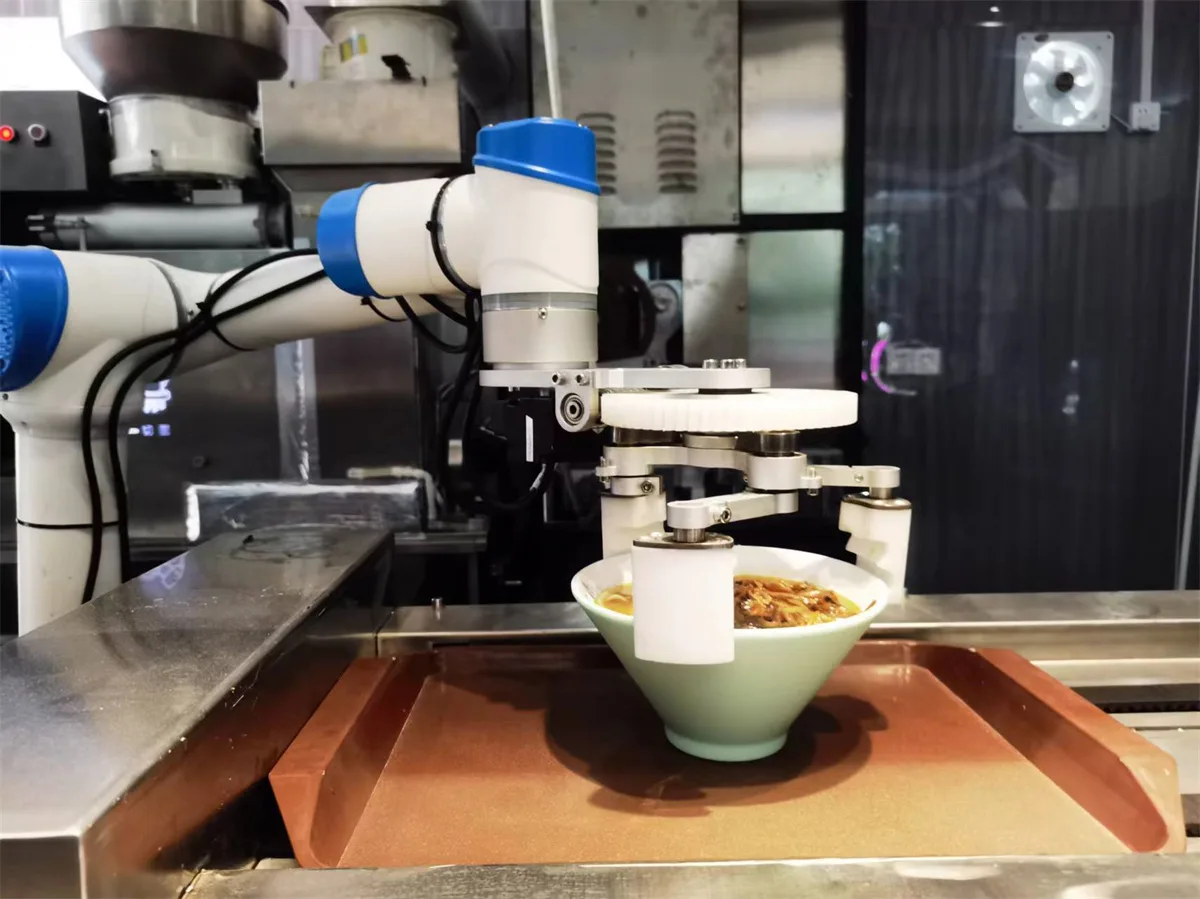
Noodles are the hardest category to standardise and the one with the highest labour cost — three routes fix three different businesses, and the wrong one is a useless machine.
Automating fresh noodles: kitchen noodle cookers, unmanned noodle robots and noodle vending machines
Noodles are widely agreed to be the hardest category in food service to standardise: they only taste right cooked to order, overcook them and they clump, undercook them and they are raw, and every shop has its own broth and toppings. But precisely because it is hard, the labour cost is high and the cook is hard to hire — the noodle cook stands by the hot broth all day and is liable to walk out in the busy season. In the past few years three routes to automating noodles have appeared: the automatic noodle cooker for the kitchen, the unmanned noodle robot at the front, and the self-service noodle vending machine. The three routes solve three different businesses, and choose the wrong one and the machine you buy back is an ornament. This article lays out what each route is really for.
Route one: the kitchen noodle cooker, cutting cost in an existing shop
If you already run a noodle shop with decent business and the only problem is that cooks are hard to hire and output is inconsistent, the best value is a kitchen noodle cooker — not a whole unmanned kiosk. The core of these machines is timed lifting and a multi-basket structure: the noodles go into the pot and are lifted to drain automatically at the set time, several baskets cook in rotation so one pot handles several portions at once, and they come out on time without anyone losing concentration. When choosing, look at three numbers: the heating power of the pot (gas or induction, which decides whether the water comes back to the boil fast — a noodle shop's worst fear at peak is cooking in lukewarm water); the number of baskets and the capacity of each (matching how many bowls you serve at once at peak); and the timing accuracy plus how the broth is dispensed. With a noodle cooker, the cook's job becomes a plating role — preparing toppings, arranging bowls, adding broth — which lowers both the hiring bar and the wage. Of the three routes this is the smallest investment and the fastest payback: a machine costs twenty or thirty thousand yuan for most shops, and the labour saved pays for it in six months.
Route two: the unmanned noodle robot, a business of opening new sites
The unmanned noodle robot is a complete fresh-cooking unit: refrigerated noodle storage, automatic cooking, automatic broth and topping dispensing, automatic serving — usually a robotic arm or carousel structure — and the customer orders and gets noodles cooked to order in three to five minutes. What it suits is not an existing shop but sites where you want a noodle shop but cannot afford the staff: airports, stations, hospitals, business parks and late-night mall slots. Choosing one comes down to four things. First, noodle compatibility: alkaline noodles, ramen, rice noodles and flat rice noodles need different cooking times and water temperatures, so confirm how many sets of parameters the machine supports for how many noodle types on your menu — do not buy one that only cooks a single type. Second, the taste floor: the noodles must actually be boiled; machines that rely on soaking and rehydrating dried noodles produce swollen, clumped output, so cook three bowls in a row at acceptance and check the breakage rate and texture. Third, refrigeration and shelf life: the temperature of the noodle and topping compartments, the restocking rhythm and how leftovers are handled at day's end bear directly on food safety and waste. Fourth, cleaning: the cooking water, the broth lines and the serving area need daily attention, and how easily they strip down decides how many years the machine survives. These units are not cheap, so before signing go and eat a bowl at a site that is already running — do not rely on a demonstration video.
Route three: the noodle vending machine, low investment for spreading points
The noodle vending machine is a self-service format: the machine refrigerates prepared noodles and broth and, after ordering, heats or quickly boils them to serve, supporting 24-hour unmanned sale on one to two square metres, at a price clearly below the unmanned noodle robot. Its positioning is specific: convenience stores, hotel corridors, factory dormitories and motorway service areas — points with modest but steady traffic and late-night demand — where a machine selling twenty or thirty bowls a day covers its rent. Look at three things: whether serving is by heating or by boiling (boiling tastes noticeably better and costs more); how the restocking cold chain is solved (noodles and broth need daily or every-other-day delivery, and without a cold-chain distributor within range the machine is an ornament); and output consistency — vending machines most often fail on broth overflow, poor sealing and noodles sticking together, so test ten bowls in a row at acceptance and count how many come out intact. And do the full arithmetic: machine cost, cold-chain delivery, site rent and electricity together, and whether the cost per bowl can be held under 30 per cent of the selling price — work that out before you spread points.
Choosing between the three: decide from the cards you hold
- An existing noodle shop wanting lower cost and steadier output: fit a kitchen noodle cooker — small investment, quick result;
- No shop, wanting an unmanned noodle site with budget available: choose the unmanned noodle robot — closest to freshly boiled, suited to stations, hospitals and business parks;
- Wanting many low-cost points and accepting a compromise on taste: choose the noodle vending machine, but confirm the cold-chain radius first;
- Wanting to do ramen: settle first who does the "pulling" — machine-formed dough with machine boiling is today's mainstream, and pure equipment that forms noodles on site is not mature, so do not be misled by demonstration videos;
- Every route needs a human interface: restocking, cleaning and emergencies take at least half a person; fully unmanned exists only in the contract.
Accepting noodle equipment: insist on the three-bowl test
Whichever route you choose, run the three-bowl test before signing. The first bowl: cook your menu's flagship noodle type and time it from order to serving, then taste it — breakage rate, firmness and broth temperature all have to pass. The second bowl: simulate the peak, cooking more than ten bowls in ten minutes, and watch whether output speed drops and whether the broth turns cloudy. The third bowl: serve one more two hours later, simulating a restart after a lull — many machines fail at exactly this cold start. Pass all three and then talk price and after-sales. The essence of the noodle business is fresh cooking to order, and any equipment's acceptance standard should come back to that one line: when the bowl reaches the customer, is it still a bowl they would come back for.
The content of this article is for selection reference. Specific figures are subject to the manufacturer's official parameters and on-site verification.