Autonomous wheeled, rail-guided AGV and humanoid serving robots are three different technologies with very different costs and limits — how to match the route to your venue.
Three technical routes for food-serving robots: autonomous, rail-guided and humanoid, each doing its own job
Owners thinking about a food-serving robot usually get stuck on one question: the machines on the market look nothing alike — some run around on the floor on their own, some hang from ceiling rails, some are built to look like a person. Which do you buy? The answer is not in the machine, it is in your venue: what you are serving, how far it travels, how wide the aisles are, how heavy the footfall, and what the budget is. All food-serving robots look like "carrying dishes from the kitchen to the table", but underneath are three entirely different technical routes whose cost, reliability and suitable settings differ by orders of magnitude. This article lays out the three routes so you can identify which one fits.
Route one: autonomous wheeled robots, the workhorse of restaurant serving
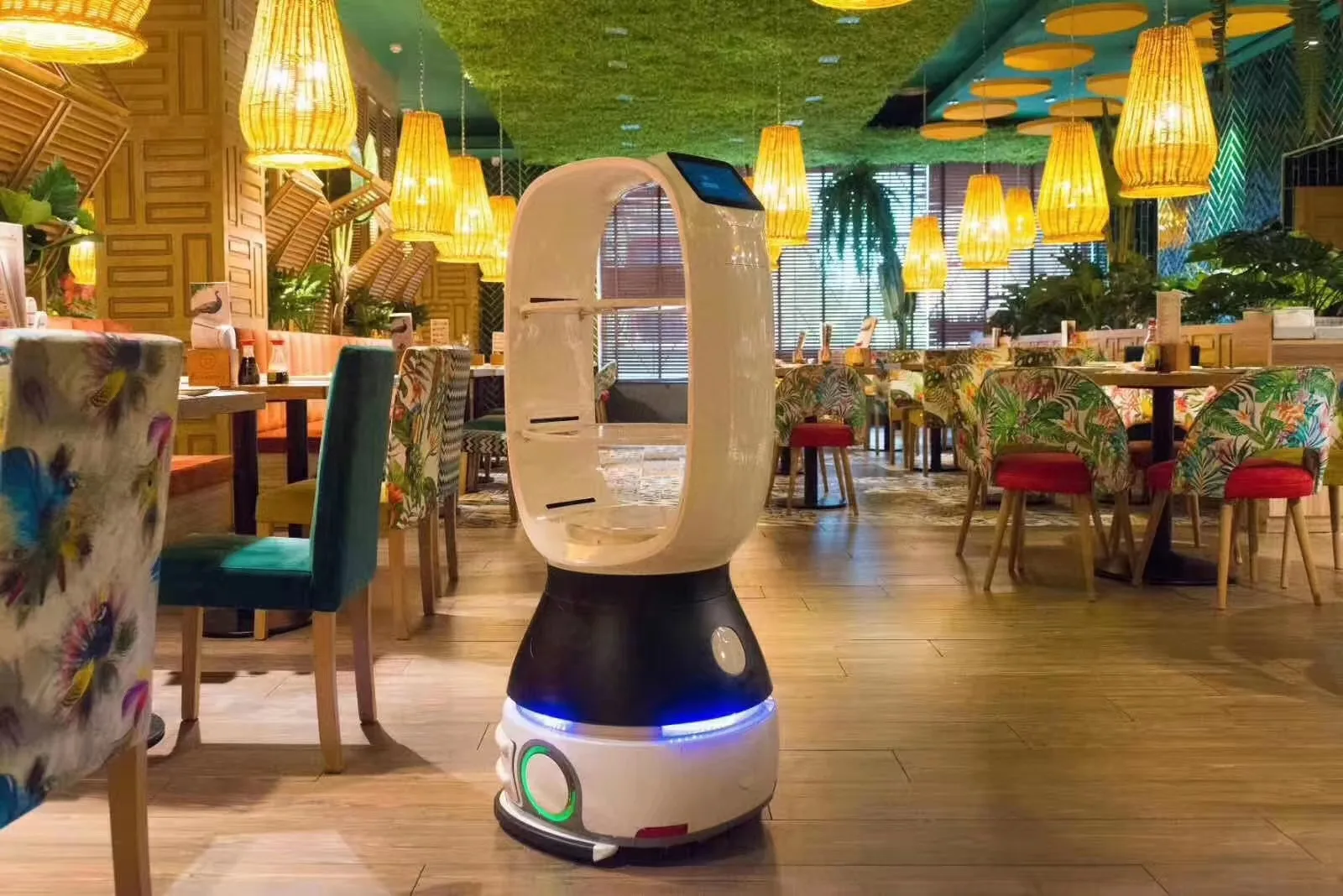
The robot that runs around on the floor on its own is the most widely used in food service; hot-pot restaurants, Chinese restaurants and canteens all run them. It localises by lidar plus visual sensors and builds its own map, so the route does not have to be laid in advance: move a table, add a temporary station, and you simply re-run the map. When choosing, look at five numbers: payload and number of tray levels (commonly three to four levels, 5 to 10 kg per level); running speed (generally 0.5 to 1 metre per second, slowing automatically in crowds); battery life per charge (a lunch peak usually demands more than four hours of continuous running); obstacle sensitivity (can it stop for glass, a step, a child darting out); and how it swaps batteries or returns to charge. These machines suit restaurants with scattered tables and non-fixed traffic patterns. The downside is that in dense footfall they stop and start, so peak throughput suffers, and slopes, thresholds and greasy floors have to be dealt with first. Prices run from twenty or thirty thousand to fifty or sixty thousand yuan per unit — the lightest investment of the three routes — and most venues buy one to trial, then add more once it runs well.
Route two: rail-guided and fixed-path AGVs, for fixed lines and heavy volume
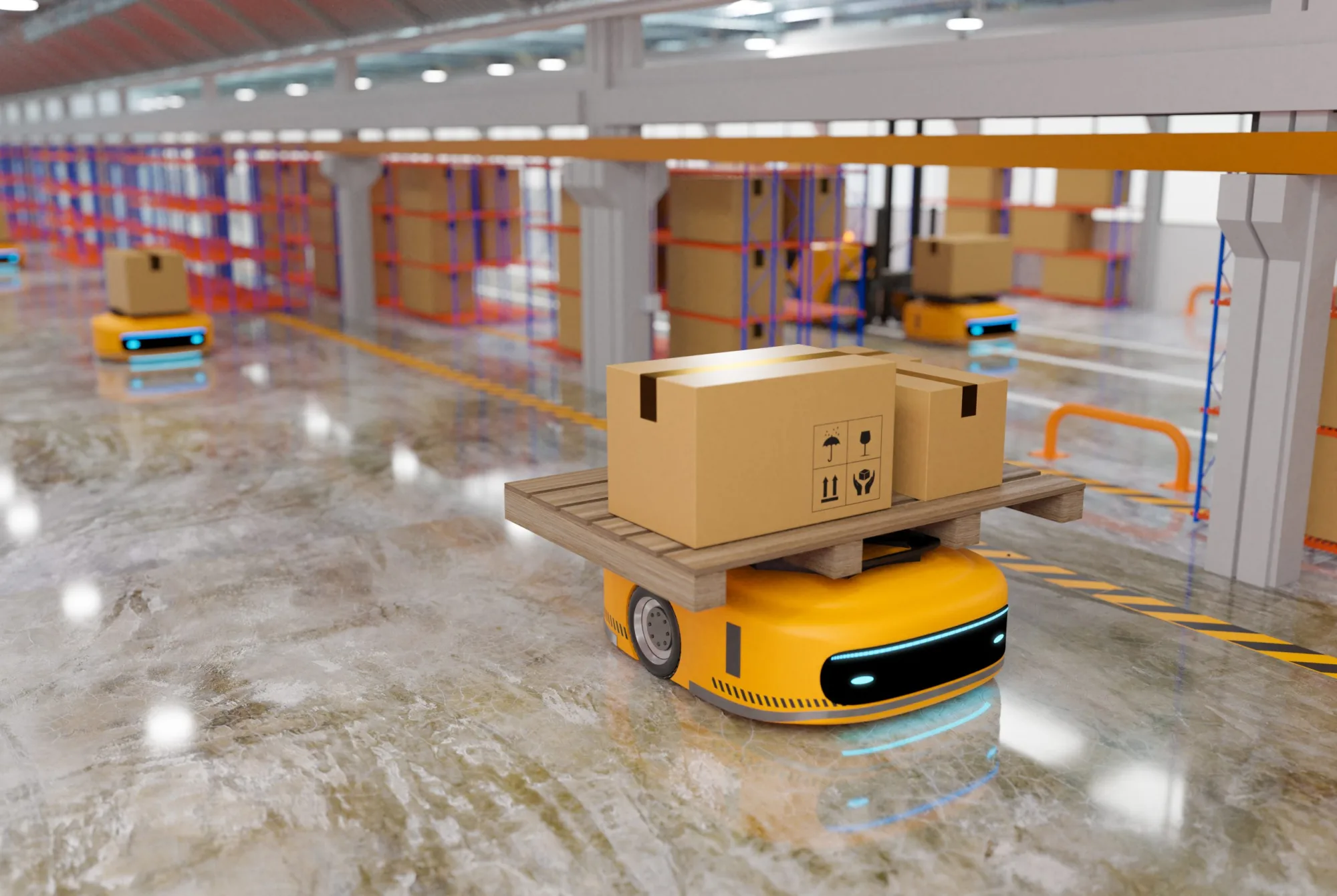
A rail-guided serving robot travels along a rail on the ceiling or the wall, unaffected by floor traffic, with steady speed and high punctuality; it is most efficient when the distance from the pass to the pickup point is fixed. It is common on fixed lines such as from a canteen counter to a holding cabinet, or from the kitchen to the plating room, and for floor-to-floor delivery in hospitals and office towers. The rail must be installed in advance, and once the line is set it is hard to change, so it suits places whose traffic pattern will not change for three years, not restaurants that rearrange the layout often. The other type is the AGV cart that follows magnetic strips or QR codes on the floor; its payload is far greater than a wheeled service robot, carrying dozens of meal boxes per trip, suited to bulk movement from a central kitchen to a portioning room or contract-catering distribution. Laying the strips is simple, but re-routing means re-laying. This route involves more upfront construction than autonomous navigation and costs more per unit, and in the accounts it should be treated as handling equipment rather than service equipment: what it replaces is a porter, not a waiter.
Route three: humanoid robots — first decide whether it works or draws a crowd
Humanoid serving robots have drawn a lot of attention in the past two years, but before deploying one, separate two things: the tasks it can do today, a wheeled robot can mostly do too, and more reliably and more cheaply; what is genuinely valuable about it is the attention the humanoid form attracts — in a banquet hall, a hotel lobby or a mall event, a humanoid machine that waves and talks is itself a talking point and a traffic draw. Today's bipedal humanoid hardware is expensive, short on battery and has not fully solved the risk of falling, and the greasy floor of a restaurant kitchen is an especially hostile environment. The conclusion is blunt: if the budget is limited and the goal is to replace serving labour, choose route one without hesitation; for brand display and photo-op traffic, rent a humanoid for the event period rather than paying the purchase price for a demonstration. Wait until bipedal systems mature and drop in price before asking one to genuinely carry plates.
Matching the three routes to your venue: a decision table
- Hot-pot restaurants, Chinese à la carte and fast food serving: autonomous wheeled robot — flexible, cheap, adapts as the layout changes;
- Canteen counter to pickup cabinet, fixed-line delivery in hospitals and office towers: rail-guided or fixed-path AGV — steady, punctual, untroubled by crowds;
- Central kitchen to portioning room, bulk boxed-meal handling: a high-payload AGV cart, with efficiency calculated on tonnage and trips;
- Banquet halls, hotel lobbies, mall events for traffic: a humanoid robot on short-term rental, with cost counted per event;
- Small owner-run shops with narrow table spacing: hold off — in a venue with aisles under 90 cm, any robot will block the way.
Before you commit, have the vendor run three days of data on site
Whichever route you choose, insist on a real test before signing: have the vendor run the machine in your venue for three actual days and record the time per delivery trip, the average trips per day, the number of times it got stuck or stopped to give way at peak, and whether the battery lasts a full peak. Test two windows in particular — the first ten minutes of the meal service surge and the table-turn peak; if the robot performs poorly then, running smoothly the rest of the day means nothing. For rail-guided systems, also confirm how food is handled during a power cut or breakdown, and whether there is a manual bypass. One last reminder: a serving robot solves the "carrying" leg of the end-to-end journey; who plates at the pass, who delivers to the table, who clears the dirty dishes — buy the machine before sorting out the traffic flow and it will simply move your bottleneck from people to equipment.
The content of this article is for selection reference. Specific figures are subject to the manufacturer's official parameters and on-site verification.