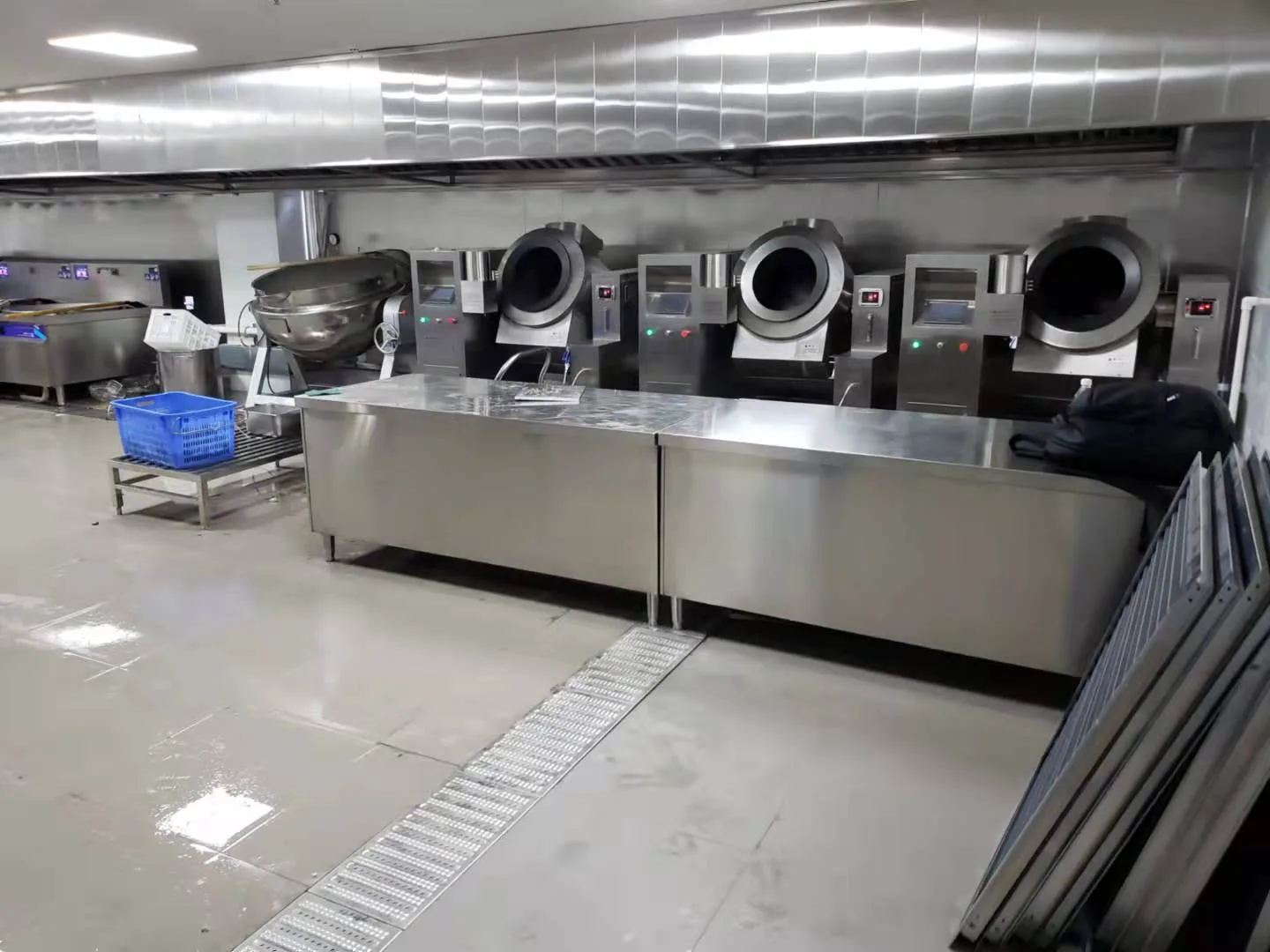
Wok hei broken down into three measurable engineering variables — pan heat-up rate, temperature control accuracy and tossing coverage — and how to read them on a spec sheet.
How cooking robots create wok hei: heating, temperature control and tossing
"Wok hei" is a phrase Chinese chefs use every day, but on a machine it maps to three measurable physical processes: how fast the pan heats up, how accurately the temperature is held, and how often and along what path the food is tossed. Whether a cooking robot can produce dishes with wok hei comes down to how well it performs on these three. This article takes the technology apart so you can read a spec sheet and ask suppliers the right questions.
Heat-up speed sets the starting point for a flash-fry
Chinese flash-frying depends on a hot pan, hot oil and ingredients hitting the pan at speed: the food sears quickly, Maillard reactions form on the surface, and that is where the aroma comes from. A traditional gas burner run at full power takes one to two minutes to bring the pan up to temperature. Commercial cooking robots using induction or direct gas heating cut that to 10-20 seconds, and some models reach pan temperatures in the 300C range. The "heat-up rate" figure on a spec sheet (15C/s, 27.8C/s and similar) describes exactly this capability. One caution: a high peak temperature does not mean the machine can hold temperature throughout the cook. Whether the temperature curve is stable is what matters, which is why two machines both rated at 300C can produce very different food.
Temperature accuracy decides how precisely you control the cook
Chinese cooking distinguishes between a fierce flash-fry, a medium-heat reduction and a gentle simmer, and each stage demands a different pan temperature. A robot reads pan temperature in real time through sensors and then adjusts heating power through its control algorithm. Two figures are worth checking: measurement accuracy (commercial models generally hold within +/-1C) and sensor response time (infrared sensing can reach the 0.1-second level). The higher the accuracy, the more faithfully the temperature curve written into the recipe is executed. A recipe can be written in the finest detail, but if the sensor cannot keep up it means nothing. Some models measure the pan wall and the pan base separately, which addresses scorching at the base and uneven heating of the wall; the difference is clear when cooking sauces and base pastes.
The tossing mechanism determines how evenly the food heats
A human chef tosses with the wrist; a robot uses a stirring mechanism. There are three mainstream types. Planetary stirring blades orbit the pan base while also rotating on their own axis, giving high coverage; they suit most home-style and fast-food dishes. Drum types tumble the whole pan and suit high-volume contract catering. Multi-axis robotic arms mimic hand movement and offer the greatest flexibility, but the structure is complex and the price is high. On the spec sheet, look at blade coverage: commercial models generally reach 90-99%. Low coverage means the pan base scorches easily and the food heats unevenly, a problem that shows up sharply with starch-thickened sauces and dishes that stick.

The dispensing system: seasoning stops depending on feel
How much salt, and when to add the soy sauce, is the last hurdle in standardising a stir-fry. Cooking robots today generally include automatic dispensing: liquid ingredients are metered by pump to 0.1 g accuracy, and powders are metered by screw or vibration, with high-end models reaching +/-0.02 g for solids. Timing is controlled by the recipe - scallion and ginger in at 180C pan temperature, cooking wine 30 seconds later - with no human intervention at any point. This is the core reason robot output stays consistent. The number of ingredient bins sets the seasoning capacity of a recipe; for chains with long menus and many seasonings, leave headroom in the number of dispensing lines when you specify.
Digital recipes: turning a veteran chef's experience into a file
All of the parameters above end up stored in a recipe file: the temperature curve, the dispensing sequence and gram weights, the tossing rhythm, the judgement on when to plate. A recipe can be tuned in one outlet and then pushed to every outlet at the touch of a button. This is the capability chain operators value most - "the taste of this shop" can be replicated in the next one without depending on whether a particular chef stays or leaves. When you specify, ask whether the recipe system supports remote distribution and permission management, and who carries out dish development. That directly determines how soon the machine actually starts producing after you buy it.
How to verify a cooking robot on site
A spec sheet only describes the ceiling; real performance has to be verified in the kitchen. Three steps are recommended. First, bring three of your own dishes: one flash-fry that tests heat control, one braised dish with sauce, and one with a complex process such as deep-fry followed by stir-fry. Compare each against the hand-made version. Second, run a continuous service test: cook more than 30 portions back to back at lunch-peak volume and watch consistency, temperature stability and the pace of service. Third, look at cleaning: have the kitchen team actually strip down the ingredient bins and the stirring mechanism, and assess how long daily closing-time cleaning takes. After these three steps you will have a clear answer on whether this machine suits your kitchen.
Common traps when buying
One: comparing price without comparing service. After-sales networks differ widely between brands - in tier-two and tier-three cities, confirm there is a local service point first. Two: ignoring recipe development cost. Once the machine arrives, recipes have to be developed for your dishes, and you need to confirm up front whether that work is included in the quote. Three: buying more machine than you need. The flagship model with every function is not necessarily right for a small shop; specify the configuration your service structure actually requires, and the money saved will cover several months of electricity. Four: not checking the data interface. Chain brands should confirm in advance whether the recipe system supports remote distribution and whether data can be exported, so the equipment does not become an information island later. Finally, read the parameters against your own menu mix: fast-food outlets focused on small-plate flash-fries should look hardest at heat-up speed and temperature accuracy, contract caterers doing large-pan batch cooking should look at batch capacity and stirring coverage, and chains should look at the recipe system and remote management. There is no absolute good or bad in equipment parameters - the parameters that match your scene are the good ones.
The technical figures in this article are given for selection reference. Specific ratings are subject to each manufacturer's official specification sheet.