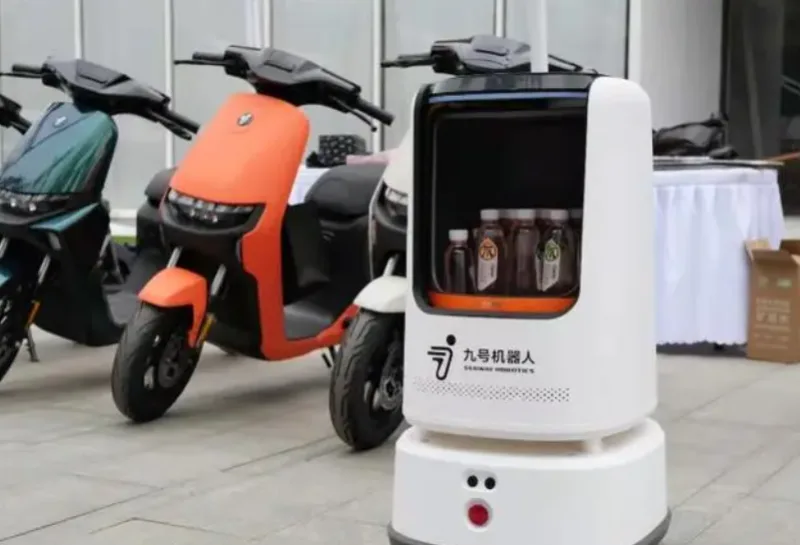
Equipment sellers like to say a robot works anywhere. Buyers cannot think that way. A fast-food outlet, a staff canteen, a mall unit and a tourist-site restaurant have different customers, different peaks and different staffing — and the machines that suit them are poles apart.
Choosing a catering robot in 2026: fast food, canteens, mall units and tourist sites, matched one by one
Equipment sellers like to say a robot works anywhere; a buyer cannot think that way. A fast-food outlet, a staff canteen, a mall unit and a tourist-site restaurant have different customers, different peak periods and different staffing structures, and the machines that suit them are poles apart. This article takes the four common scenarios one at a time — what each should install and what it should not — and ends with a tick-list to work through.
Before choosing, answer three questions. First, which part of the operation is slowest, most expensive and most error-prone — the wok that cannot get food out, the collection point where people pile up, or the staff running back and forth with plates? Second, whose shift will the robot cover — those two hours of the lunch peak, or the whole day? Third, can this machine pay for itself, on a year's figures rather than on how it looks in a showroom? If those three cannot be answered, do not go a step further. If they can, work through the list below.
Fast food: watch output speed and takeaway collection
The lifeblood of fast food is output speed at the lunch peak, and a takeaway share that rises every year. These outlets have fixed menus and a stable output structure, which makes them the best fit for standardised equipment: a cooking robot or an automatic fried-rice machine takes over the wok station, giving consistent output and no panic when the chef is away; noodle and rice-noodle shops can add an automatic noodle cooker, one bowl per batch, with no one watching the heat. Where takeaway volume is high, the collection point is often jammed by riders and the counter turns into chaos — adding a heated collection locker so riders can scan and self-collect clears the counter at a stroke.
Two rules for fast-food selection. First, capacity is calculated as "how many portions in the peak hour", not per day: if the equipment cannot hold up at the lunch peak it is just an ornament. Second, most of these outlets sit in commercial districts with little room for electrical work, so favour countertop models that run from a plug; where a three-phase supply has to be installed, get a site survey and a quotation first — do not discover when the goods arrive that the power cannot be connected.
Canteens: holding up under one or two hours of simultaneous service
The biggest difference between a canteen and a fast-food outlet is simultaneous service. Several hundred or several thousand people arrive within a 90 to 120 minute window, and the kitchen has to get every dish out in that time — ten minutes late and there is a chorus of complaint. The automation that suits a canteen is a different set again: a large-batch cooking machine taking 5 to 15 kilograms a batch, with capacity planned backwards from the service windows; a rice production line where rice volumes are large, taking over steaming, turning and holding; automatic portioning equipment for serving rice and dishes, to cut the queueing at the counters; and dishwashers for tray collection and washing, bringing back-of-house labour down across the board.
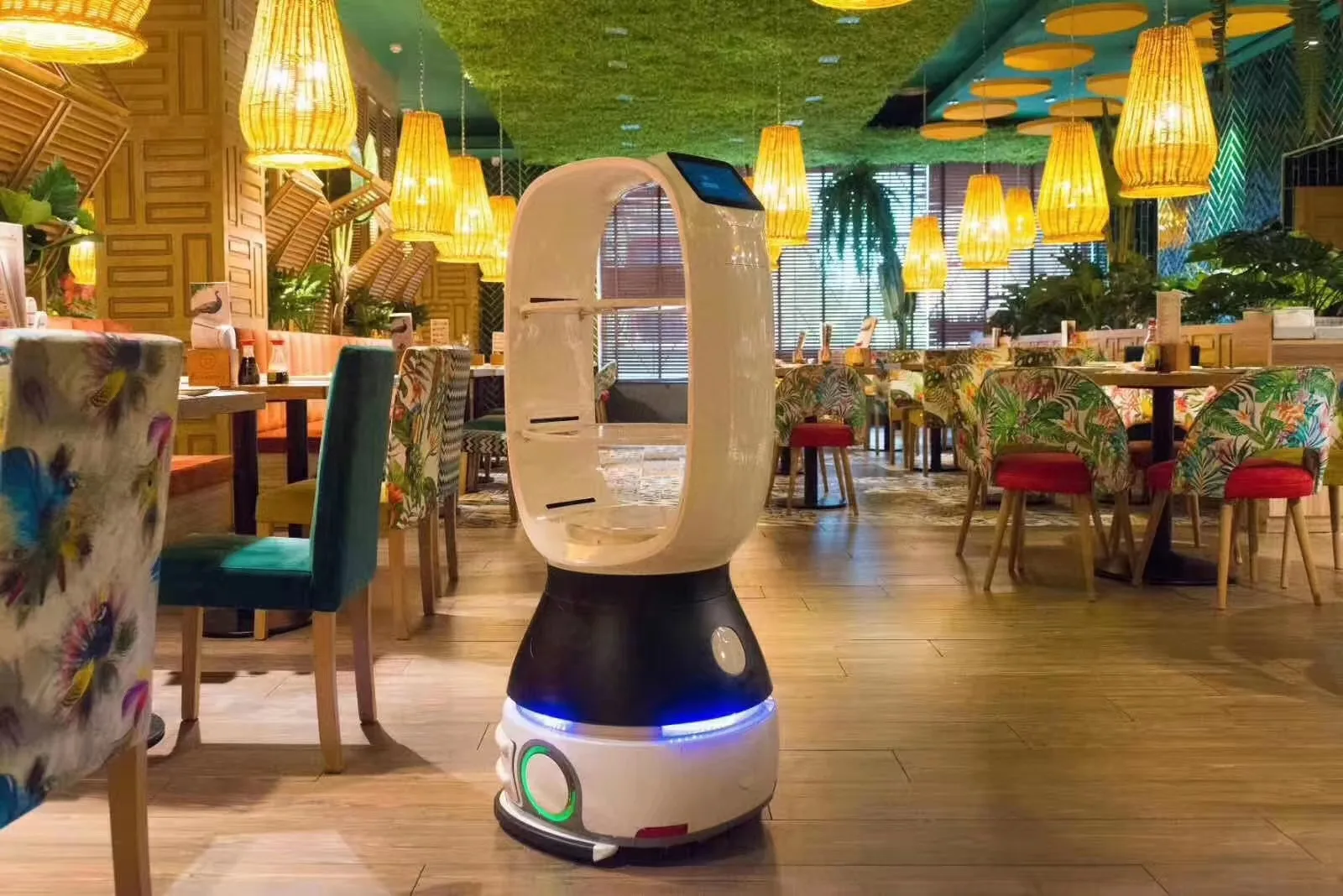
Canteen purchasing has one practical problem: contract catering posts are among the hardest of all roles to fill, and a machine solves not just today's missing person but next year's as well. But if canteen equipment goes down, it affects the meals of a thousand people, so when choosing a supplier, put after-sales response time and spare-parts stock on the same level as price. Anyone experienced in contract catering knows this.
Mall units: rent and labour are both expensive, so a robot is a sales-per-square-metre calculation
The arithmetic of a mall restaurant is different from a street-side one: rent is priced by the square metre, trading runs from morning into the evening, and labour is typically around 20 percent of turnover. Here a robot is not about "saving one person" but about sales per square metre — whether the same square metre can turn one more table and stand one fewer member of staff. Where the run from kitchen to table is long, a serving robot or a rail-mounted robot removes the wasted walking of a food-running post and speeds up delivery at peak. A visible machine in the display position — a milk tea or coffee robot — is a talking point in itself and draws people in, and counting that marketing value in the account shortens the payback period immediately.
Mall units also have to get past the property management team: noise, safety certification, electrical capacity and fire evacuation routes all have to be confirmed with the mall's engineering department before fit-out. Some malls have an additional review process for back-of-house automation equipment, and it is not quick, so put it into the schedule when negotiating the unit — do not leave the paperwork until the fit-out is finished.
Tourist sites: peak season overwhelms, low season idles — the equipment must be robust and easy to maintain
Tourist-site catering is a classic tide business: one day in peak season equals a week in low season. There is no time to recruit when staff are needed, no time to train the people who are hired, and by the time they are trained the peak has passed. What suits a tourist site is self-service equipment that is as simple to operate as possible: automatic fried-rice machines, automatic noodle machines and fresh juice machines where a few presses produce the finished item, and a new employee can pick up in half an hour. The equipment itself has to be robust: power at tourist sites is unstable, there is a lot of dust, and some positions are semi-outdoor, so ask specifically about the ingress protection rating and voltage tolerance. In low season the machine may sit idle for several months, so ask at selection whether it can be brought back to running with one press and whether anyone comes out to service it — do not let the machine sleep in the storeroom and fail to wake up.
The match-up list
- Fast food: countertop cooking or fried-rice machine, plus an automatic noodle cooker where the menu calls for it, a heated collection locker and self-service checkout; the priorities are peak-hour capacity and consistency.
- Canteens: large-batch cooking machines, a rice production line, automatic portioning equipment and dishwashers; the priorities are simultaneous-service capacity, after-sales response and spare-parts stock.
- Mall units: a serving robot or rail-mounted robot, plus traffic-drawing equipment such as milk tea, coffee or juice machines; the priority is the sales-per-square-metre account, with the mall's approval process started early.
- Tourist sites: mainly simple self-service output equipment; the priorities are robustness, low-season storage and training cost.
- Public areas: a disinfection robot can be added, and suits canteens, malls and tourist sites alike, covering both the hygiene display and customer reassurance.
One honest closing point: the same machine can lead to completely opposite conclusions in these four scenarios. A fried-rice machine is core capacity in a fast-food outlet and may be no more than a talking point at a tourist site; a large-batch cooking machine is essential in a canteen and a waste of capacity in a small fast-food shop. Match your own scenario first, then have the supplier produce a proposal around your peak data — far more reliable than listening to a salesperson go through the features one by one. Where you are unsure, leasing before buying is better than committing the full price up front to a machine you cannot use.
The content of this article is for selection reference. Specific figures are subject to the manufacturer's official parameters and on-site verification.