The hard part of a milk tea robot is not making the drink but handling the toppings and shelf life; and the maths only works above a certain daily volume.
Can robots make fresh drinks in a milk tea shop? Separate the technology from the numbers
Putting robots in milk tea shops is argued over fiercely online: some call it a gimmick, some say it saves three staff. Having run through a round of projects, the conclusion is that you cannot generalise. There are genuine technical obstacles to a robot making milk tea, but they are not in the making — they are in the ingredients. Nor is the arithmetic favourable for every shop: a shop without the volume is simply buying equipment for its landlord. This article sorts milk tea robots into categories and works through the technical difficulties, the cost arithmetic and the settings they fit, so you can judge against your own shop.
First separate the three kinds of "milk tea robot" — do not be confused by the names
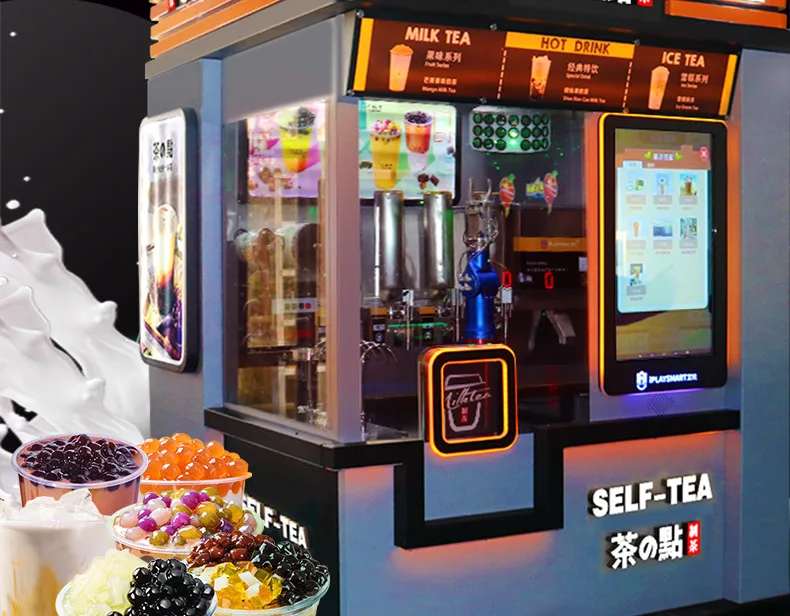
What the market calls a milk tea robot is really three different routes. The first is the integrated cabinet: tea liquor, milk base and syrup all sit in tanks inside the machine and are metered by pumps and valves; after ordering it dispenses and seals automatically. It takes one to two square metres, serves consistently and fails rarely, and it is the mainstream choice today for unmanned points and unmanned tea shops. The second is the robotic-arm workstation: collaborative arms imitate a human hand taking a cup, adding ingredients and mixing. It is flexible and visually striking, but serves slowly, is complex and expensive; today it is mostly used for coffee, rarely for milk tea. The third is actually "semi-automatic": staff brew the tea and prepare ingredients while the machine handles the repetitive actions — weighing, sealing, labelling. Many franchise stores call this combination a robot too. It does not save much labour, but it cuts errors. Ask the vendor which of the three they mean first; cost and results differ several-fold.
Where the technology actually stalls: not the shaking, but the toppings and shelf life
The technical difficulty of a machine making one cup of milk tea is widely overestimated. Sugar level, ice level and the tea-to-milk ratio are controlled by pumps and metering valves to roughly one gram, steadier than a human hand; the tea liquor is extracted fresh, and with temperature and time set, batch variation is smaller than brewing by hand. What is genuinely hard is the toppings: pearls, taro balls, coconut jelly and boba have irregular shapes, take time to cook, and have a shelf life once cooked. Machines that boil pearls and scoop toppings automatically exist, but the mechanism is complex, cleaning is awkward, and stability is below that of liquid ingredients. So the unmanned milk tea solutions that actually work generally take the compromise of machine for liquids, human for toppings: staff boil two batches of pearls a day, the machine handles the tea base and assembly, and at peak one person watching one machine plus one topping station covers the work of two or three. If anyone tells you "fully automatic, it even boils the pearls", have them run three days on site before you believe it.
Why an arm finds milk tea harder than coffee
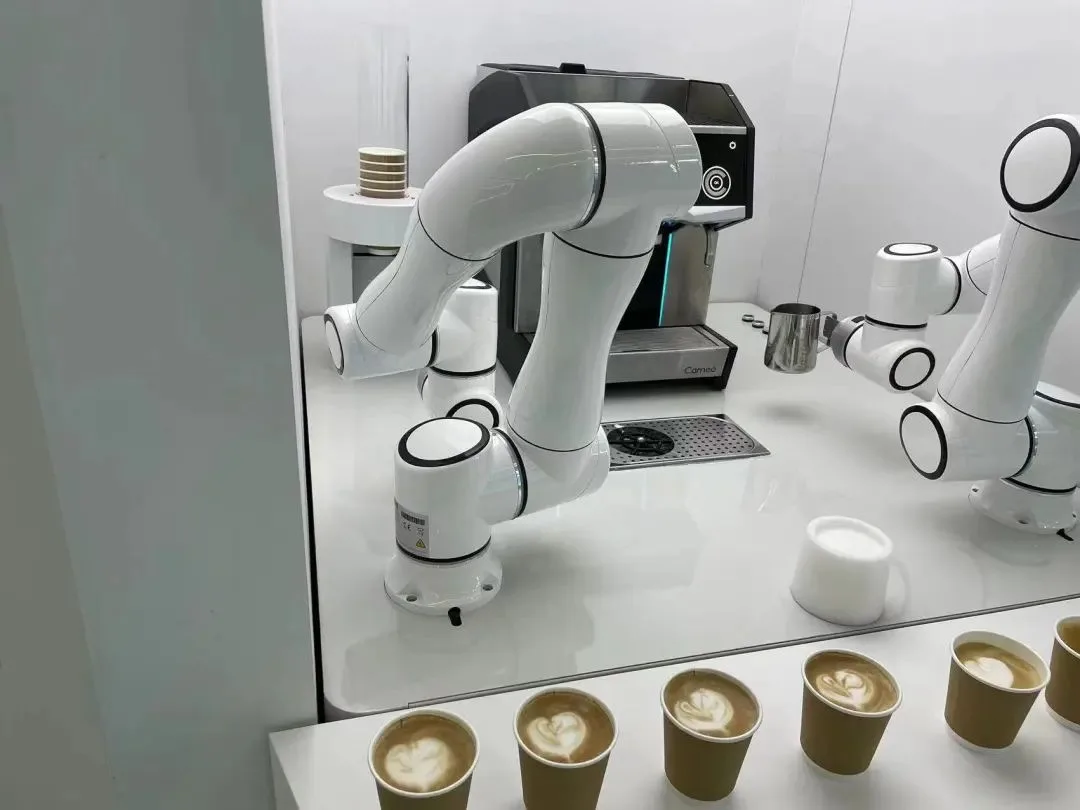
The most mature application of robotic-arm fresh drinks is coffee: the actions are regular, cup pickup, extraction, milk texturing and placing on the counter follow a fixed path, and a cup takes about two minutes. Milk tea adds shaking, topping and sealing, the ingredients are viscous and contain particles, and a gripper that does not hold them well spills; the shaking motion also demands more of the arm's load capacity and trajectory precision, and serving times generally stretch past three minutes. For a milk tea shop with a queue, an arm will jam solid at peak. So in the milk tea setting the arm machine is positioned as demonstration and traffic-baiting: put one in a mall event, a trade show or a new store opening, output a few dozen cups a day as a talking point, and let a cabinet unit or staff do the real volume. A shop on a limited budget should not pay for the arm's "sense of technology" — spend it on a cabinet and on the serving flow instead.
Working out the arithmetic: it saves peak labour, not total labour
The labour account in a milk tea shop has to be broken down. An ordinary shop selling 300 to 500 cups a day staffs three to four people: one on order and till, one making tea, one on ingredients who also helps serve. What the robot replaces is part of the "making tea" step: the machine produces the tea base and the liquid part, staff fall back to ingredient prep and toppings, and most shops go from four people to two or three, saving 5,000 to 10,000 yuan a month in labour. Equipment ranges from tens of thousands to over a hundred thousand yuan, and on a saving of two people the payback is generally one to one and a half years. But note two preconditions: first, the volume has to be there — a shop selling under 200 cups a day already manages with two people, the machine saves nobody and the payback stretches indefinitely; second, shops with a high delivery share benefit more, because delivery orders have rigid sugar and ice specifications, exactly the work machines do best, while dine-in orders with extra toppings still need people. Do the arithmetic with "machine takes delivery orders, people make dine-in specials" as the normal state, and the numbers will be real.
Which shops it fits and which it does not: the plain truth
What works: shops with a high delivery share, a standardised menu and steady volume; unmanned tea points in malls and office towers; brands opening 24-hour unmanned windows in scenic areas, business parks and hospitals; chain head offices piloting "front shop, back factory" to standardise cup output with machines. What does not: boutique shops built on handcraft and secret menus, where the customer comes precisely for the ritual of something made by a person; small neighbourhood shops whose volume needs only two people; and shops treating the machine as a gimmick and expecting it to bring traffic — a machine does not draw traffic, only a robotic arm does. Three practical points to finish. First, licensing: for unmanned equipment making fresh drinks, local requirements on the premises and permits for on-site production and sale differ, so ask the local market regulator before signing. Second, cleaning and disinfection: the tea and milk lines must be washed daily, shelf-life management has to go into the staff roster, and one failed hygiene inspection costs far more than the labour saved. Third, rent before you buy: many vendors offer monthly rental or revenue sharing, so if you are unsure, rent for three months and run the data — data speaks more reliably than a sales pitch.
The content of this article is for selection reference. Specific figures are subject to the manufacturer's official parameters and on-site verification.